What a "made with AI" label means when you license footage
What the AI label on a stock asset tells you about releases, rights and your own disclosure duties, and where generated footage is the wrong choice.

The label tells you three practical things: no real person stood in front of a camera, so there is no model release behind anyone in the frame; the asset cannot be used editorially; and depending on where you publish, you may have a disclosure duty of your own. It does not tell you the file is unusable commercially, and it does not tell you anything about quality either way. The sharpest limit is not legal but evidentiary: generated footage is the wrong tool whenever the picture is making a claim that something real happened, existed, or was photographed.
I make stock footage and images with generative AI and label it as such, so I am describing the side of this I work on. Everything below applies to any supplier's AI assets, including mine.
What the label actually certifies
On Adobe Stock, the contributor has to tick "Created using generative AI tools" at submission, and that flag is what produces the label you see. Two more things in Adobe's generative AI FAQ matter more to a buyer than the label itself.
If the content resembles a real person but was not based on one, the contributor selects "People and Property are fictional". Where someone is identifiable, Adobe is explicit: "Any generative AI content depicting or intended to portray an identifiable person requires documentation." So an AI asset with the fictional flag carries no release, because there is no person to release anything — which removes the usual risk of a model objecting to how their face was used, and replaces it with a different question about whether the face resembles anyone.
The second point is a hard boundary: "Generative AI content cannot be submitted to the Illustrative Editorial collection." If your use is editorial — a news story, a piece about a real company, a real event — an AI asset is not an option, whatever it depicts.



Your own disclosure duty
This is the part that changed recently and that most briefs have not caught up with. Article 50 of the EU AI Act applies from 2 August 2026.
Two obligations sit in it. Providers of AI systems generating synthetic image, audio, video or text must ensure outputs "are marked in a machine-readable format and detectable as artificially generated or manipulated" — that one falls on the tool makers, not on you. The obligation that reaches you is on deployers: anyone using an AI system that generates or manipulates image, audio or video constituting a deep fake must disclose that the content "has been artificially generated or manipulated".
The scope turns on the Act's own definition. Article 3(60) defines a deep fake as "AI-generated or manipulated image, audio or video content that resembles existing persons", and extends that to real objects, places, organisations and events, where the result would falsely appear authentic. A generated scene of invented people in an invented office is not a deep fake on that wording. A generated shot presented as a real street, a real building, a real product or a real event is where the duty bites.
There is a narrower rule for creative work: where the content is part of an "evidently artistic, creative, satirical, fictional or analogous work or programme", the deployer need only disclose its existence, "in an appropriate manner that does not hamper the display or enjoyment of the work".
In practice this gives a usable test. Ask what the image is asserting. If it is illustrating an idea — a concept of teamwork, a mood, a decorative background — you are not claiming anything happened. If it is standing in for evidence, a place, a person or a testimonial, you are, and that is where disclosure and credibility both become your problem rather than the supplier's.
Rights: what the licence does and does not give you
A licence is permission to use a file. It is not a transfer of exclusive rights, and with AI material that distinction is sharper than usual.
The US Copyright Office's report Copyright and Artificial Intelligence, Part 2: Copyrightability (January 2025) concluded that "copyright does not extend to purely AI-generated material", and that on current technology "prompts do not alone provide sufficient control" to make the prompter the author. It also states that copyright still "protects the original expression in a work created by a human author" where AI-generated material is included — so your own layout, edit, grade and composite remain yours; the generated raw material underneath does not become yours by licensing it.
The practical consequence is about exclusivity, not legality. Nobody can stop a competitor generating something very similar, and no stock licence of any kind gives you exclusivity unless you buy it explicitly. For a background texture, a podium, a shadow overlay, that is irrelevant. For an asset you intend to build a brand around — a recurring character, a mascot, a signature hero image — it is the reason to commission bespoke work with a contract that assigns rights, rather than licence a generated file.
Metadata is now part of what you bought
Two separate rules point the same way, and both are easy to break by accident in a production pipeline.
The AI Act's machine-readable marking obligation means generated files are expected to carry provenance information. Separately, Google's Merchant Center specification requires that images made with generative AI keep their embedded metadata, such as the IPTC DigitalSourceType tag, and says not to strip it even when editing.
So if your workflow flattens, re-exports, screenshots or runs assets through a resizer that drops metadata, you can turn a compliant file into a non-compliant one without touching a pixel. Keep the original download, and check that whatever tool sits at the end of your chain preserves metadata.
Where generated footage is the wrong choice
Four categories, in order of how often I see them get people into trouble.
Anything evidentiary. News, documentary, a real location, a real building, a real product, a case study, a testimonial, a "this is our office" page. The failure here is not legal risk first, it is that being caught destroys the credibility of the whole page.
Recognisable people and brands. A face that resembles a real person, a visible logo, a product that is identifiably someone's. Adobe's own rules push contributors away from this, but a buyer should still look at the frame.
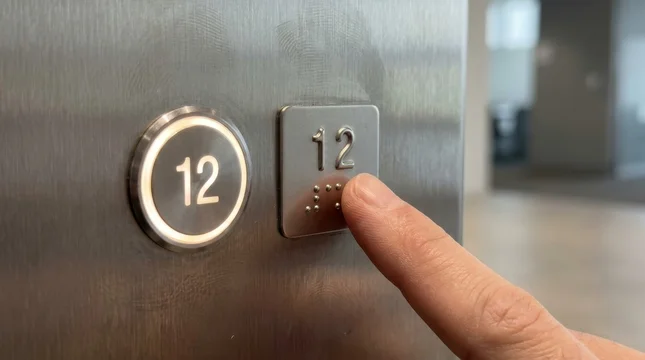
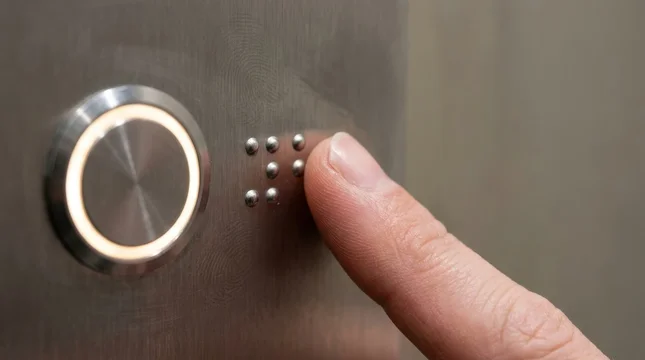
Representation-sensitive subjects, where generated imagery is weakest in a specific, documented way. The CHI 2024 study "They only care to show us the wheelchair" ran focus groups with 25 people with disabilities and found that text-to-image models repeatedly produced reductive archetypes. The practical lesson is not to avoid the subject but to look very closely at specifics: assistive devices with impossible geometry, Braille that is not a real pattern, sign language that means nothing.
Anything with text in frame. Signs, labels, screens, packaging. Generated lettering is frequently nonsense, and it also blocks localisation.
 00:06

By contrast, the places where generated footage is straightforwardly the right tool are the ones where no claim about reality is being made and no identifiable person or property appears: environments and objects, backgrounds and textures, product stages, seasonal and conceptual scenes, and anything that would be expensive to stage for no gain in truthfulness.



Checklist for a buyer
- Decide first whether your use is editorial. If it is, an AI asset is out, regardless of how it looks.
- Ask what the image asserts. Illustrating an idea is safe ground; standing in for evidence is not.
- Check whether people and property are flagged as fictional, and look at faces yourself for resemblance to anyone real.
- If you publish in the EU and the content resembles real people, places, organisations or events, plan how you will disclose it.
- Keep the original file and confirm your pipeline does not strip metadata.
- For anything your brand will be built on, licence is not enough; commission with an assignment of rights.
- Read every sign, label and screen in frame at full size.
- On assistive devices, hands, eyes, teeth and jewellery, zoom to 100%; for video, step through the frames where hands move.
- Do not rely on a supplier's description for whether a clip has real transparency, real audio, or a real release. Check the asset.
- Say so internally. The teams that get caught out are usually the ones where the person approving the campaign did not know.
What to do next
Sort the brief before you sort the footage: write down whether each image is illustrating a concept or standing in for something real. The first group is where generated assets save you money without costing you anything; the second needs a camera, a release and a photographer.
You can see how I label and organise my own work across the collections on this site. Everything there is generated and flagged as such on Adobe Stock, with people and property fictional.
Sources
- Generative AI FAQ, Adobe Stock Contributor help: labelling, fictional people and property, identifiable persons, editorial restriction
- Article 50, EU Artificial Intelligence Act: transparency obligations, applicable from 2 August 2026
- Article 3, EU Artificial Intelligence Act: definition of a deep fake
- Copyright and Artificial Intelligence, Part 2: Copyrightability, US Copyright Office, January 2025
- Image link specification, Google Merchant Center Help: metadata for AI-generated images
- "They only care to show us the wheelchair": disability representation in text-to-image AI models, CHI 2024