Halloween stock footage: what to license, and when
What Halloween campaigns actually need to show in 2026, when to license it, and the tired shots that make a seasonal campaign look like everyone else's.
Most Halloween briefs need three things: a decorated home or table, food and drink, and one atmospheric hero shot. Decorations and costumes are now the biggest spending categories in the season, so the footage that gets used tends to show a decorated setting rather than a generic orange background. Licence it in August or early September, because that is when your audience starts buying. And plan for two looks in the same campaign, because the season now runs from cosy autumn in September to full dark in the last week of October.
The season is bigger, and the money moved to decor
US consumers are expected to spend $13.5 billion on Halloween in 2026, up from the record $13.1 billion in 2025, according to the National Retail Federation's annual survey with Prosper Insights & Analytics. Per-person spending is $115.14, roughly level with last year. Participation is 74%, against 68% in 2019.
The split between categories matters more than the total, because it tells you what people are actually photographing in their own lives and what brands are selling against. Costumes account for $4.4 billion, decorations $4.3 billion, candy $4.1 billion and greeting cards $0.8 billion. Candy is still the most widely bought item at 96% of shoppers, but decorations are bought by 78% and cost more per household.
The activity list follows the same shape. Handing out candy leads at 61%, then wearing a costume at 50%, with decorating the home, carving a pumpkin and watching scary movies tied at 42%.
That is your shot list in miniature: a doorstep, a costume, a decorated porch or table, a carved pumpkin, and a dark room lit by a screen.
 00:05
00:05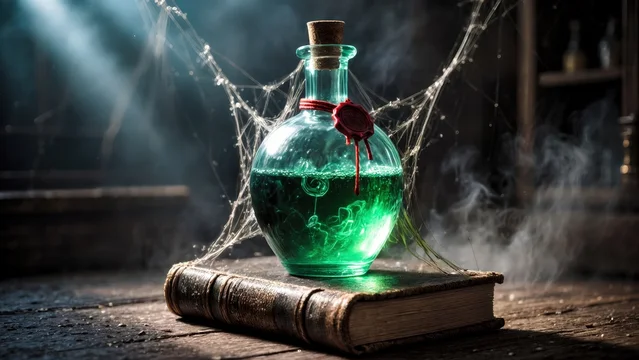


Licence in August, publish in September
Halloween is no longer a week. Forty-nine percent of consumers expect to start shopping in September or earlier, against 34% a decade ago. NRF's own tracking found that by early August, a quarter of consumers had already bought at least one Halloween item, with adult costumes and candy leading, and 42% said fall weather is what makes them start.
For anyone planning campaigns, that sets a hard deadline. If your first Halloween email goes out in the second week of October, you are talking to people who finished shopping. Creative needs to be approved in August, which means the footage has to be found in July or August.
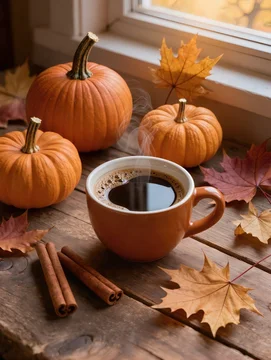
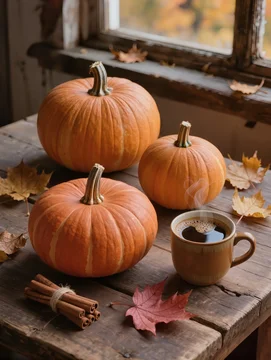
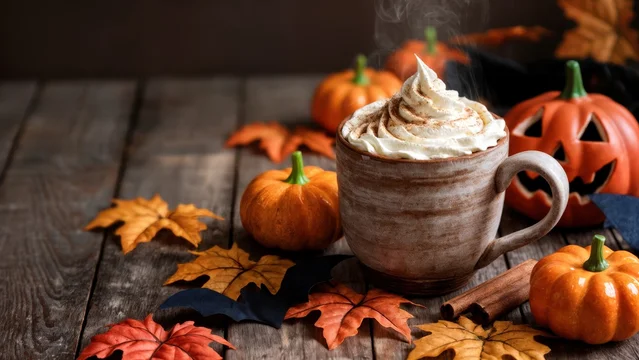
There is a second consequence, and it is the useful one. A September audience is not in a horror mood yet. They are in an autumn mood: pumpkins on a table, warm light, a hot drink. The scary material lands later. If you run one campaign from mid-September to 31 October, you need both registers, and they should look like the same brand.
 00:05
00:05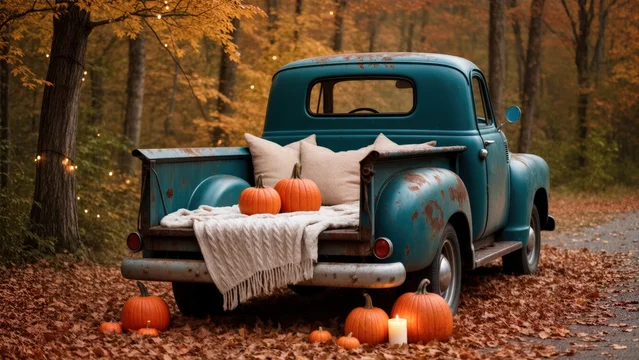
Buy for reuse
NRF found that 34% of shoppers are looking for items they can reuse in later years or repurpose for other occasions. The same logic applies to your licensing budget.
Some Halloween imagery is single-use by construction: it has a date, a costume trend or a specific slogan in it. Other imagery covers the whole autumn. A table set with pumpkins and candles, a truck bed loaded with pumpkins in a forest, a farmhouse at dusk, a steaming mug beside cinnamon sticks — these work from the middle of September through to Thanksgiving in the US, and through the autumn generally elsewhere.
When I am deciding what to make, this is the first filter I apply. A clip that only works on 31 October has one week of usefulness a year. A clip that reads as autumn first and Halloween second has two months.
Two looks, and most campaigns need both
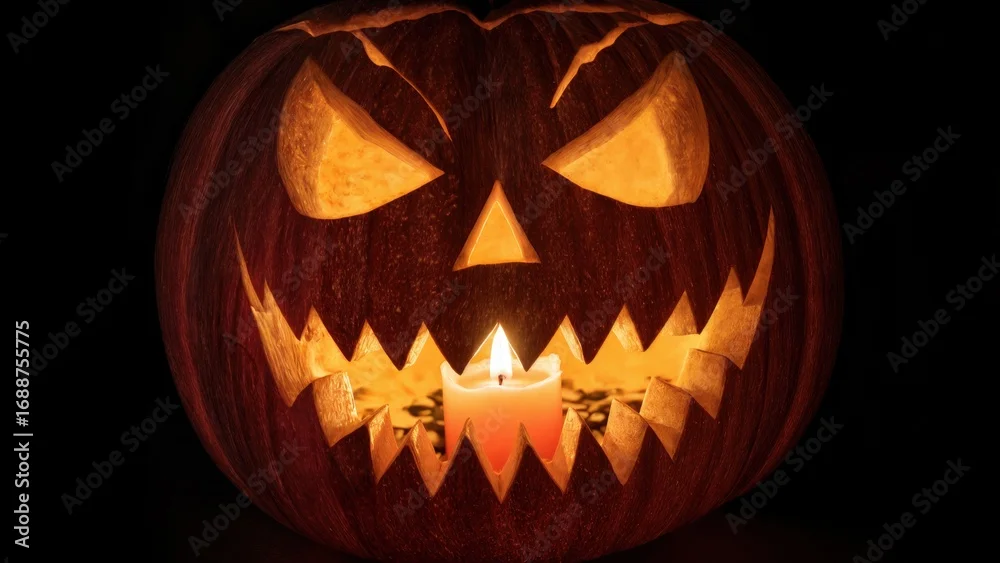
The cosy register is warm light, wood, wool, food, daylight through a window. The dark register is fog, candlelight, blue-black shadow, a house on a hill. They are lit differently and graded differently, and mixing them badly is the most common reason a Halloween campaign looks assembled rather than designed.
If you are licensing for a series, pick one register per placement and keep it consistent: cosy for the September newsletter and product shots, dark for the late-October hero banner and the social video. Check that the two sets at least share a colour temperature discipline, so the switch reads as a deliberate escalation.
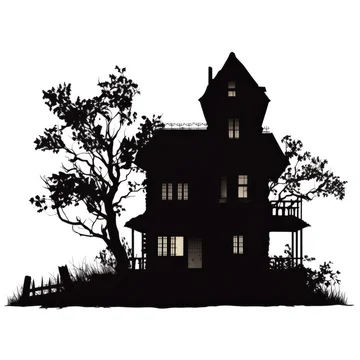
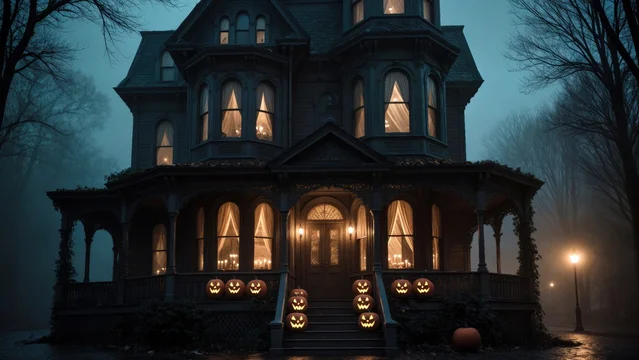
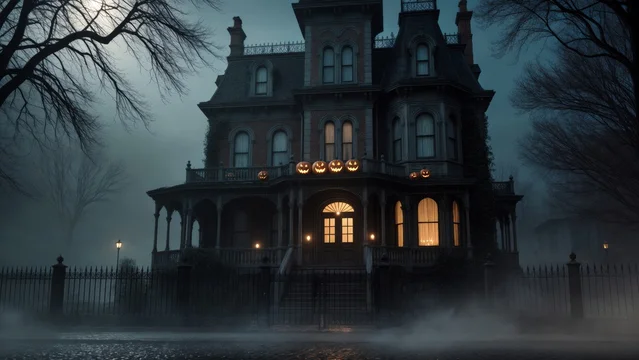
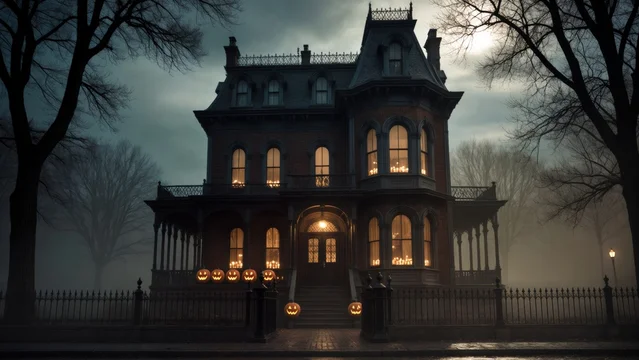
For the dark register, watch three things when you review a clip. Fog should have a direction and a source, not sit as an even grey wash. Candlelight should flicker unevenly, because a perfectly steady flame reads as a still image with a filter on it. And a house or a graveyard should have one clear focal point; a frame crowded with three tombstones, a moon, bats and a lantern gives your text nowhere to sit.
Cut-outs do more work than you expect
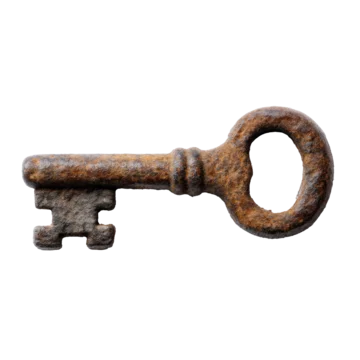
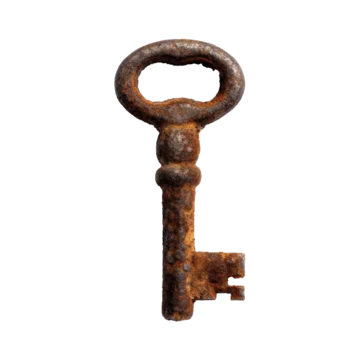
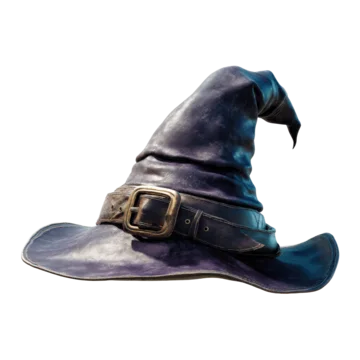
For retail design, the most reused Halloween assets are not scenes at all. They are single objects on transparent or plain backgrounds: a witch hat, a broomstick, candy corn, vampire fangs, a rusty skeleton key, a potion bottle. They drop straight into a banner, an email header, a price tag, a packaging mock-up or a social frame, and they survive a change of layout.
Two practical points when you choose them. First, check that the cut-out edge is genuinely clean around fine detail, which means fur, straw bristles, web strands and hair: that is where a rushed mask shows. Second, prefer objects that read at small sizes, because most of these end up 200 pixels wide in an email.

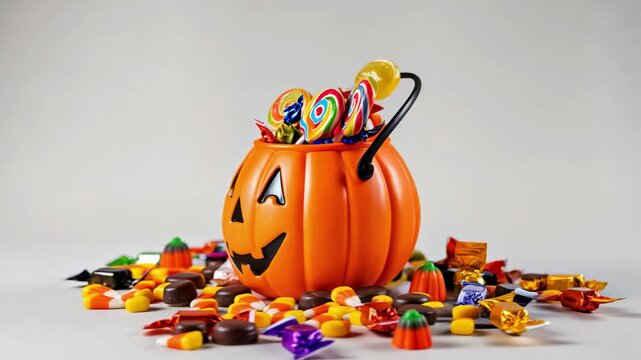
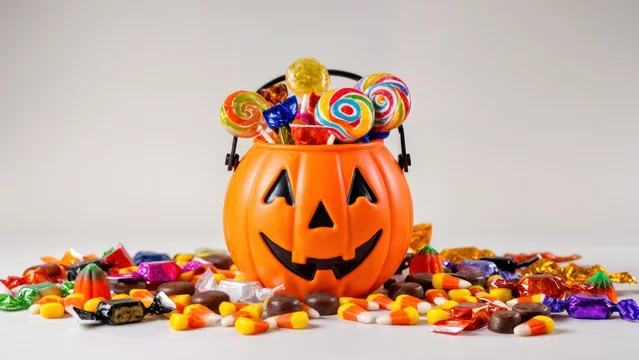
Candy and food shots follow a similar rule. A close-up of one item on a plain surface will be cropped and reused all season; an elaborate table scene will be used once.
 00:05
00:05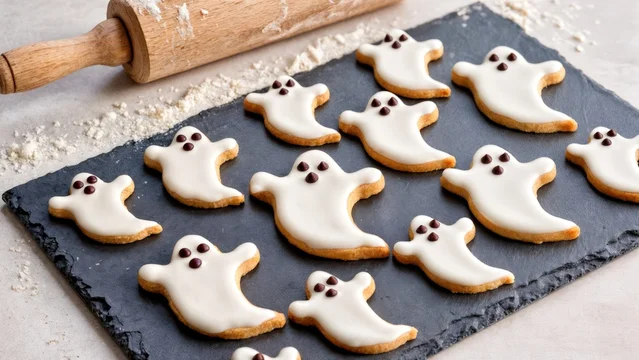
Mistakes that make a Halloween campaign look generic
- Orange-and-purple gradient backgrounds with nothing in them. They date instantly and they say nothing about the product.
- Costumed models on white cyclorama. They were the default a decade ago and they now read as a costume-shop flyer.
- A single pumpkin on a plain surface as your hero image. It is the most licensed Halloween shot in existence.
- Licensed characters, or anything that resembles one. Film and franchise costumes carry rights that stock does not cover.
- Horror that is genuinely frightening in a retail placement. Gore and jump-scare imagery limits where the campaign can run and how young an audience it can reach.
- Any frame with text baked into it: a sign, a banner, a shop window. You cannot localise it, and in generated footage the lettering is often nonsense.
- No room for type. Check that the composition leaves a clean area of sky, wall or table for your headline before you licence.
- Mismatched sets from different sources. Two clips of the same "haunted house" from different creators rarely cut together.
A note on how this footage is made
My Halloween work is made with generative AI and labelled as such on Adobe Stock, with people and property marked as fictional. For this kind of material that is mostly an advantage: a foggy Victorian mansion, a lighthouse surrounded by lit pumpkins or a bubbling potion lab is expensive to stage and cheap to get wrong.
The checks to make are the ordinary ones. Look at candle flames and fog across the whole clip rather than a single frame. Read any text in the frame at full size. Count fingers and pumpkin stems in close-ups. And view the last two seconds carefully, since that is where generated video is most likely to drift.
What to do next
Write down the placements you need to fill and the date each one goes live, then licence against that calendar rather than against the holiday. September placements want autumn; the last ten days of October want the dark set; cut-outs serve both. You can browse my Halloween collection for scenes, objects on transparent backgrounds and atmospheric clips in both registers.
Sources
- Halloween spending expected to reach $13.5 billion, Mass Market Retailers, September 2026, reporting NRF's annual consumer survey with Prosper Insights & Analytics
- NRF: Halloween spending casts a $13.5 billion spell on consumers, Chain Drug Review, September 2026
- NRF Halloween data and trends, including early-August shopping figures
- NRF consumer survey: Halloween spending to reach record $13.1 billion, 2025