AI-generated people: what a buyer needs besides a release
Why generated people carry no model release, where likeness risk lands on the buyer, and what to check before a campaign ships.

A generated person carries no model release because there is nobody to sign one, and for most commercial work that is not a problem. What the release would have given you is replaced by three checks of your own: whether the face reads as somebody real, whether the person is illustrating an idea or standing behind a claim, and whether you owe anyone a disclosure. The licence moves less of this onto the supplier than buyers assume. This is general information rather than legal advice, and not an Adobe publication.
I make stock footage and images with generative AI and label them as such. What follows applies to any supplier's generated assets, mine included.
Why there is no release to ask for
With a photographed person the protection sits in a document held by the contributor. Adobe Stock's model release requirements ask for a signed release whenever someone can be recognised, and the trigger is broader than a visible face: close-ups of body parts need one, crowds in which no individual is identifiable do not.
Generated people fall outside that mechanism. Adobe's generative AI FAQ has contributors mark content not based on a real person but resembling one with a "People and Property are fictional" flag; where an identifiable person is depicted or intended, documentation is required instead, and prompts that reference real people are not accepted without the legal rights. The same FAQ closes one door entirely: generative AI content cannot be submitted to the Illustrative Editorial collection, so an AI asset is never the answer for an editorial use, however it looks.
So the practical difference is not that generated people are riskier or safer. One specific shield is gone: no model consented to appear beside your particular claim, because there was no model, and consent to a use was always the narrowest and most useful thing a release gave you.

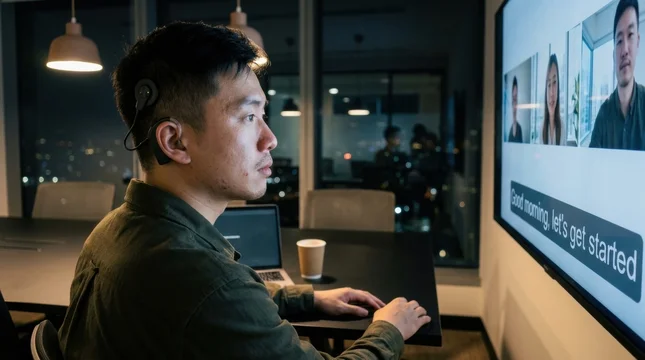
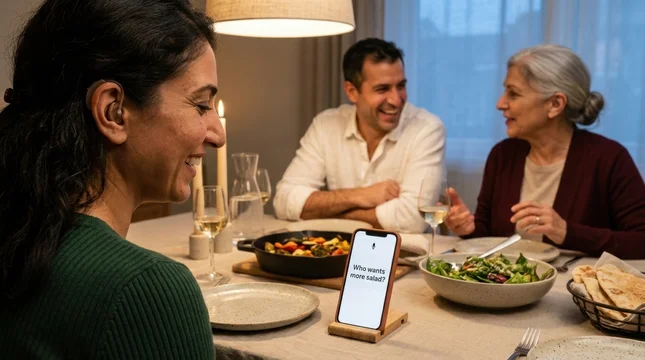
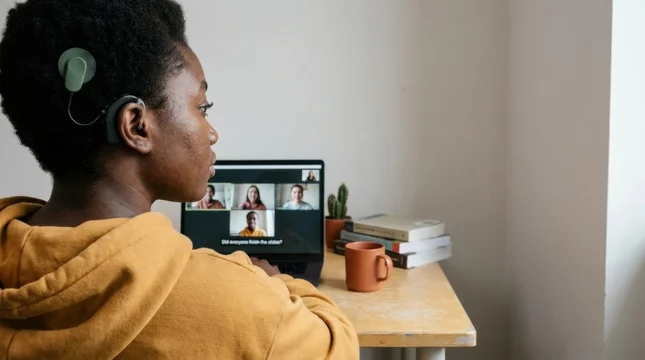
Where the likeness risk actually sits
The exposure that worries clients is resemblance: a generated face that looks like a real person, in an advertisement. The laws cited for it are narrower than the headlines suggest.
Tennessee's ELVIS Act, in effect since 1 July 2024, covers an individual's name, photograph, voice and likeness, extending the state's 1984 publicity statute to voice "regardless of whether the sound contains the actual voice or a simulation of the voice of the individual". Knowingly using those rights in advertising is actionable, as is making available a tool whose "primary purpose or function" is producing a particular identifiable individual's likeness, where the use is known to be unauthorised.
California's two 2024 laws are often misread as general likeness rules. On summaries of both bills, AB 1836 amends Civil Code section 3344.1 to prohibit digital replicas of deceased personalities without estate consent, the remedy being the greater of actual damages or $10,000; AB 2602 is a contract rule voiding certain digital-replica clauses in personal-services contracts, and applies only to new performances fixed on or after 1 January 2025. Neither was written for an advertiser who licensed a generated face that happens to resemble somebody.
A federal right is moving but has not arrived. The Senate Judiciary Committee advanced the NO FAKES Act (S. 4591) by voice vote on 18 June 2026, sending it to the full Senate; it would create a federal right in voice and visual likeness for every person, famous or not, with a notice-and-takedown process. I could not verify any step after that vote, so treat it as a pending bill and check its status before relying on it.
All of these turn on identifiability, plus usually knowledge; accidental resemblance is not the case they were built for. But a claim arrives at whoever published the advertisement, which makes the check blunt and visual: if anyone on the team says "that looks like" and then a name, use a different frame.
Three disclosure duties, and who each one lands on
The first is statutory. Article 50(4) of the EU AI Act requires deployers of an AI system that generates or manipulates image, audio or video "constituting a deep fake" to disclose that the content "has been artificially generated or manipulated", and Article 50 applies from 2 August 2026 under Article 113. Where the content is part of an evidently artistic, creative, satirical or fictional work, the duty is "limited to disclosure of the existence" of such content. Two details matter for generated people: the definition turns on content resembling existing persons, objects, places or events that would falsely appear authentic, and the obligation is written for the deployer of the AI system rather than for someone licensing a finished file. The labelling side is covered in what a "made with AI" label means.
The second is contractual, and agency producers miss it. SAG-AFTRA's summary of the 2025 Commercials Contract, running three years from 1 April 2025, defines a "synthetic performer" as a digitally created asset intended to give the clear impression of a human performer, not voiced by a human and not a digital replica. Creating one by prompting a generative system with the name, photograph, image or recording of an identified performer requires that performer's consent and payment of not less than the minimum session fee. A producer also "shall not use a Synthetic Performer primarily or materially for reasons of economy" in engaging performers. This binds signatories rather than the public, but where a production is covered it reaches the prompt and not only the output.
The third is election law, where generated people cause trouble even when nobody real is depicted. NCSL's tracker of AI in elections and campaigns lists enacted measures across many states. Most hinge on a depiction of a candidate, and the common shape is a disclosure requirement inside a window before the vote. Arizona S 1359 bars a deceptive deepfake of a candidate within 90 days of an election "unless the synthetic media message includes a clear and conspicuous disclosure"; South Dakota S 164 makes a violation a Class 1 misdemeanour; Arizona H 2394 goes wider, letting "any citizen of the State" bring an action for digital impersonation.

 00:05
Testimonials, patients and anything with a claim attached
The rule most often cited at generated people is the FTC's Consumer Reviews and Testimonials Rule, 16 CFR Part 465, which went into effect on 21 October 2024. The FTC's announcement describes it as addressing reviews and testimonials that misrepresent "they are by someone who does not exist, such as AI-generated fake reviews".
The FTC's own questions and answers are more precise, and better news than the headline: "The rule has no blanket prohibition on the use of AI-generated avatars in marketing." A generated stock avatar is not giving a consumer review; its use "might be considered a 'testimonial'", and it is prohibited only where the underlying testimonial is fake or false. The guidance says the same of human actors: "Having actors portray testimonialists is not covered by the rule unless the underlying testimonials were fake or false" — adding that such a use could still be deceptive under the FTC Act. Using a celebrity avatar without permission violates the rule if reasonable consumers would think the celebrity actually gave a testimonial.
So the dividing line is not AI against photography. It is whether the person in the frame is illustrating an idea or vouching for an experience. A generated person smiling beside a product is illustration. The same person beside a quoted result is a testimonial, and the question becomes whether anyone actually had that result.
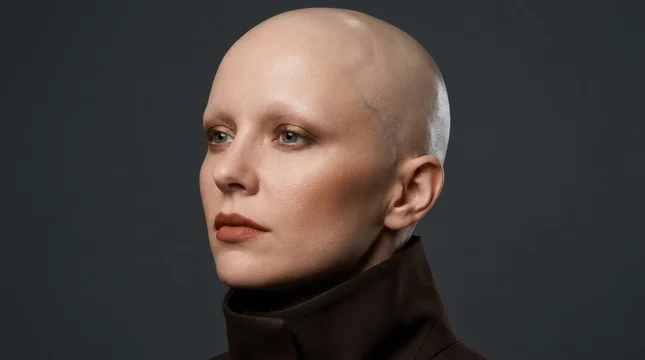
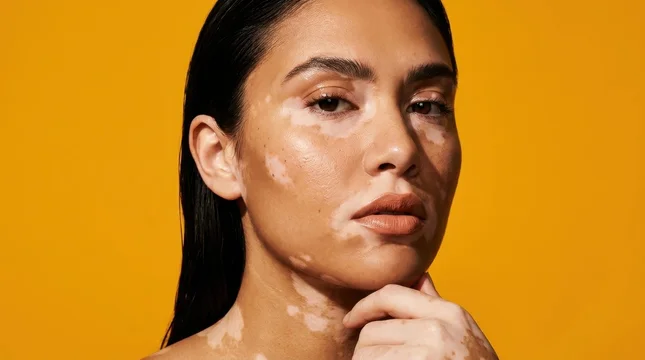
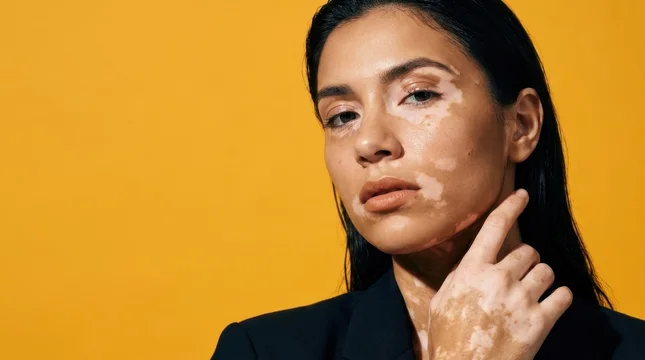
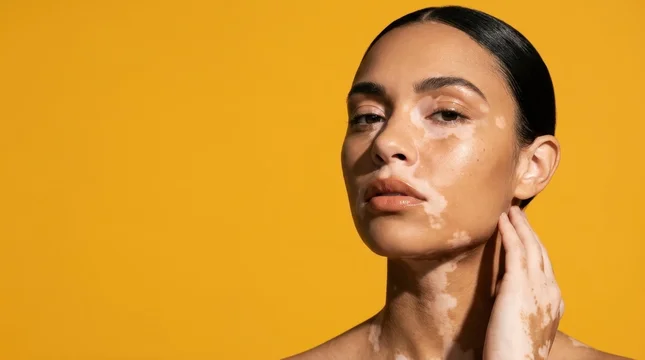
Health and money deserve one note from the licence rather than the statute book. Adobe's Stock Additional Terms restrict uses that "a reasonable person could consider unflattering, immoral, offensive, obscene, or controversial", with listed examples including "implying mental or physical impairment". Attaching any model, generated or photographed, to a condition, diagnosis or recovery narrative is a licensing question before it is an advertising one.
What the licence covers, and what it quietly does not
Those same terms, last updated 17 June 2024, do give the buyer an indemnity. Section 10.1 has Adobe defend a third-party claim alleging direct infringement of "copyright, trademark, publicity rights, or privacy rights" for an asset you licensed and paid for — publicity rights being exactly the category a resemblance dispute falls into. The limits deserve the attention. The cap is "US$10,000 per each asset" under 10.3(A), editorial works are excluded from the definition altogether, the asset must have been "used in accordance with the Terms", and claims must be commenced within two years.
Then read the exclusions in 10.2(A), because ordinary design work lives inside them: modification, combination with other materials, and "the context in which the Stock Asset or Output is used". Crop the person, retouch them, composite them onto a new plate, set a headline across them, and the first two are in play; context — the factor that decides whether a face in an advertisement becomes a publicity-rights problem — is excluded outright. The indemnity is a backstop for a clean, unmodified use, not cover for a campaign.


Before it ships
- Does the face read as a specific real person? Ask someone who did not pick the image, and believe them if they say a name.
- Illustrating or vouching? If a quote, a result or a claim sits next to them, you need a real person behind it, not a better picture.
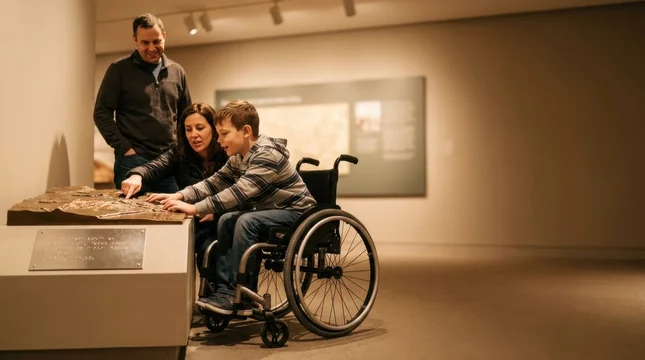
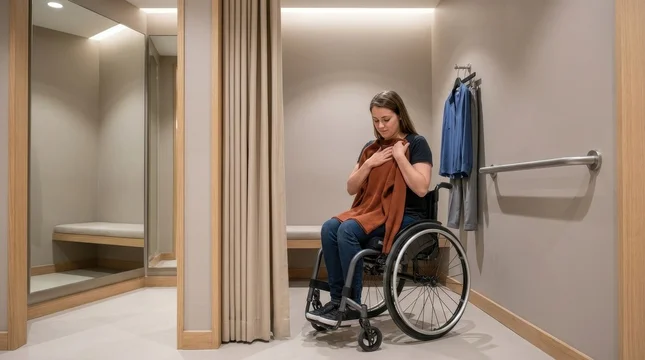
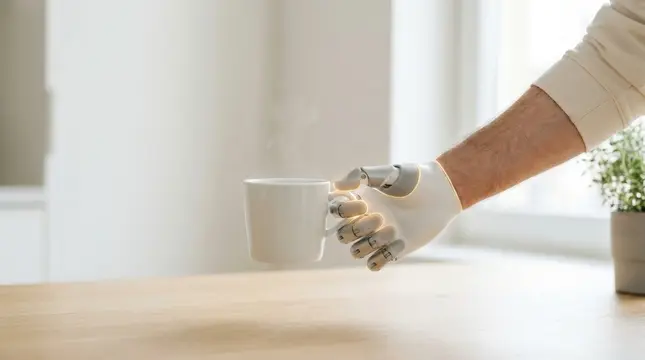
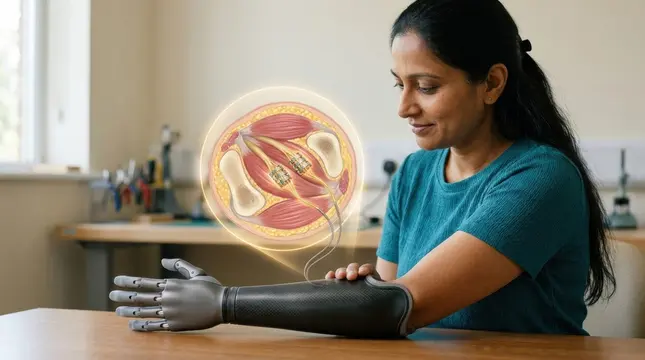
- Assistive devices, medical equipment and anything with real-world geometry: check against a reference photograph. The CHI 2024 study "They only care to show us the wheelchair" found text-to-image models producing reductive archetypes of disability, and the practical failure is usually a device that could not exist.
- Text in frame: signage, lanyards, labels, screens. Generated lettering is frequently nonsense, and it blocks localisation.
- Professional and cultural specifics: scrubs, PPE, badges, instruments, gestures. An informed audience spots a wrong uniform faster than a wrong hand.
- Hands, ears, teeth, jewellery and eyelines, in that order — the giveaways cluster there.
- Sector check before design begins: political material, regulated health and financial claims, and anything editorial are where a generated person is the wrong tool rather than a cheaper one.
- Keep the original download with its metadata, and check that the end of your export chain does not strip it.
The release was never the only thing protecting you, and with generated people its absence changes less than its presence did. Judge the frame by what it is being asked to assert. The people and portraits collection holds the everyday material, and accessibility and inclusion is where the checks above matter most, because that is where an error is most visible to the people depicted.
Sources
- Model release requirements — Adobe Stock contributor help
- Adobe Stock generative AI FAQ
- Adobe Stock Additional Terms, last updated 17 June 2024
- EU AI Act, Article 50: transparency obligations
- EU AI Act, Article 113: entry into application
- Tennessee's ELVIS Act — Manatt client alert
- California's new AI laws limit uses of digital likeness — Fenwick
- California enacts host of AI-related bills — Skadden
- Senate committee advances the NO FAKES Act — Holland & Knight
- Summary of new provisions, 2025 SAG-AFTRA Commercials Contract
- Artificial intelligence in elections and campaigns — NCSL
- FTC announces final rule banning fake reviews and testimonials
- The Consumer Reviews and Testimonials Rule: questions and answers — FTC
- "They only care to show us the wheelchair": disability representation in text-to-image AI models, CHI 2024